
Chapter 4: Let's Bake!
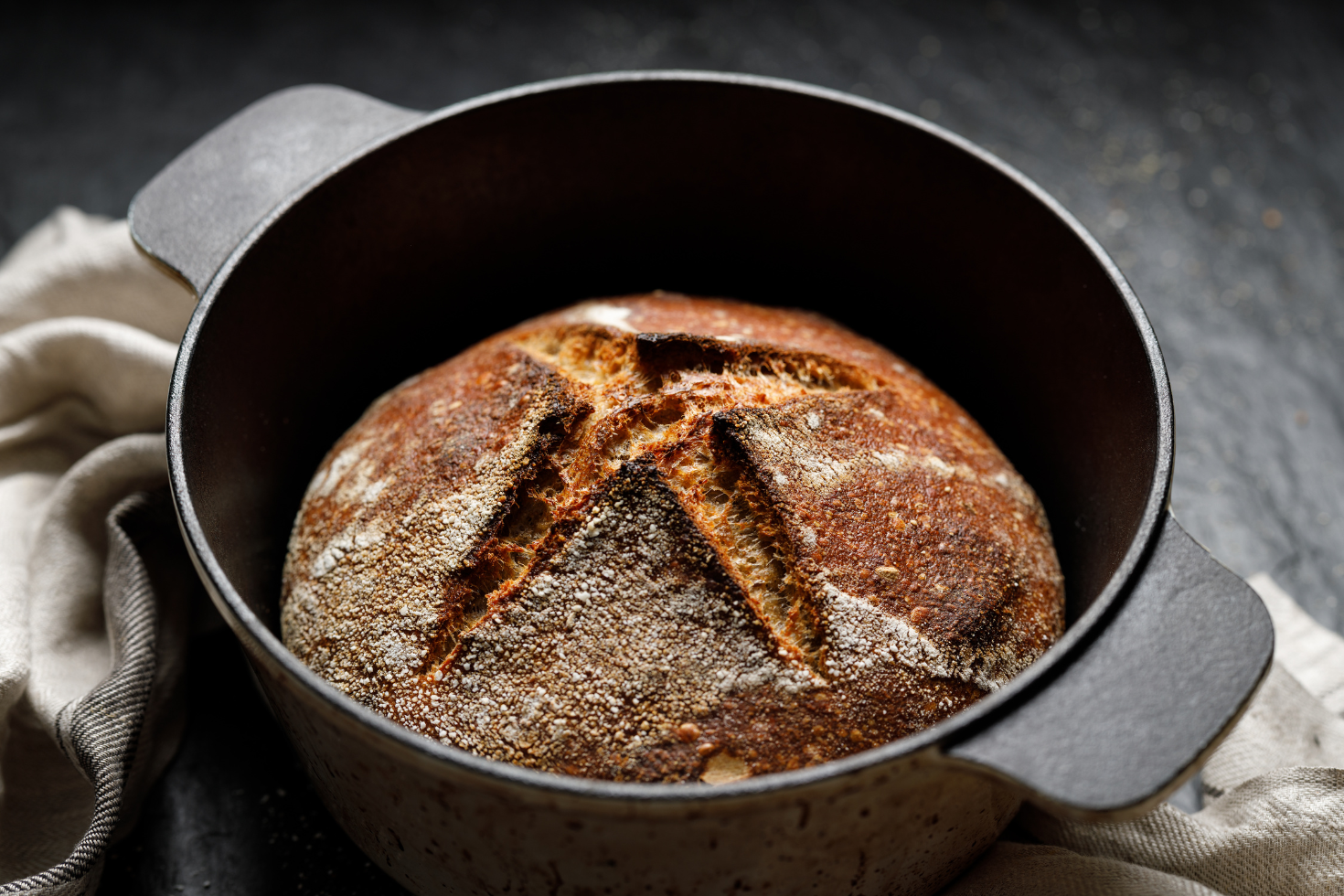
The Moment of Truth
After days of careful feeding, stretching, resting, and shaping, it all leads here: the oven. This is where your dough transforms into bread—where steam meets heat, tension becomes bloom, and you meet your loaf for the very first time.
Baking is where preparation meets surrender. You’ve done your part—now the oven does the rest.
Preheat Like You Mean It
A properly hot oven is key to achieving great oven spring—that dramatic early rise that gives sourdough its open crumb and signature shape.
Preheat to 475°F (245°C) for at least 45 minutes
Place your baking vessel (Dutch oven, cloche, or baking stone) inside while preheating
Use the lower third of your oven for more even baking
Why Use a Dutch Oven?
A Dutch oven traps steam during the first phase of baking, mimicking a professional steam-injected oven. This steam:
Delays crust formation so the dough can fully expand
Helps create a glossy, blistered crust
Enhances caramelization and color
No Dutch oven? Use a baking stone with a tray of boiling water or ice cubes beneath to create steam.
Transfer & Bake: Step-by-Step
Remove your Dutch oven from the oven carefully—it’s extremely hot
Gently turn your proofed dough out of the basket onto parchment paper
Score the loaf confidently
Lower it into the Dutch oven and cover with the lid
Bake covered for 20–25 minutes (to trap steam)
Remove the lid and bake uncovered for another 20–25 minutes, or until golden brown and deeply caramelized
Signs of a Perfectly Baked Loaf
Deep golden to chestnut crust
Visible “ear” or bloom where the score opened
Crispy crust with gentle blistering
Hollow sound when tapped on the base
Internal temperature of 205–210°F (96–99°C) if using a thermometer
A properly baked sourdough sings as it cools—listen closely for the soft crackle of the crust contracting.
Crust Development: The Art of Contrast
Your ideal crust is crisp and crackly on the outside, while the interior remains tender and open. Here’s how to influence it:
More steam → Shinier, thinner crust with better rise
Longer final bake → Thicker, crunchier crust
Higher hydration → Glossier crust with more blistering
Sugars in dough → Darker, caramelized finish
You’ve Done It
Baking is the climax of your sourdough journey—a reveal, a reward, a reminder that ordinary ingredients can become extraordinary with time and care.
Your loaf is more than bread—it’s a testament to rhythm, patience, and quiet mastery.

FAQ
-
Sourdough baking relies on a blast of heat at the beginning to create strong oven spring. Preheating your oven (and your Dutch oven) for at least 45 minutes at 475°F (245°C) ensures even heat and the right environment for your dough to rise and develop a crisp, golden crust.
-
Steam keeps the crust soft during the first phase of baking, allowing the dough to expand fully before the crust sets. Leviétte recommends baking in a Dutch oven, which naturally traps steam. If baking on a stone, you can place a tray of boiling water or a few ice cubes in the bottom of the oven.
-
Your loaf is ready when the crust is a deep golden brown, the bottom sounds hollow when tapped, and the internal temperature reads 205–210°F (96–99°C). If in doubt, bake a few extra minutes uncovered—better a crisp crust than an underdone interior.
-
Too hard? Try shortening the uncovered bake slightly or storing the bread in a linen bag after cooling.
Too soft? Remove the Dutch oven lid earlier or bake longer without the lid to dry the crust.
Too pale? Bake longer uncovered, or raise the temperature slightly for the final 10–15 minutes.
-
As your loaf cools, steam inside redistributes and the crumb structure finishes setting. Cutting too early can result in a gummy, doughy interior. Let your bread cool on a wire rack for at least 1 hour (ideally 2) before slicing. It’s worth the wait.
-
That’s the sound of the crust contracting as it cools—a good sign! Bakers call it “singing,” and it usually means you’ve achieved the right combination of crust caramelization, hydration, and baking time.